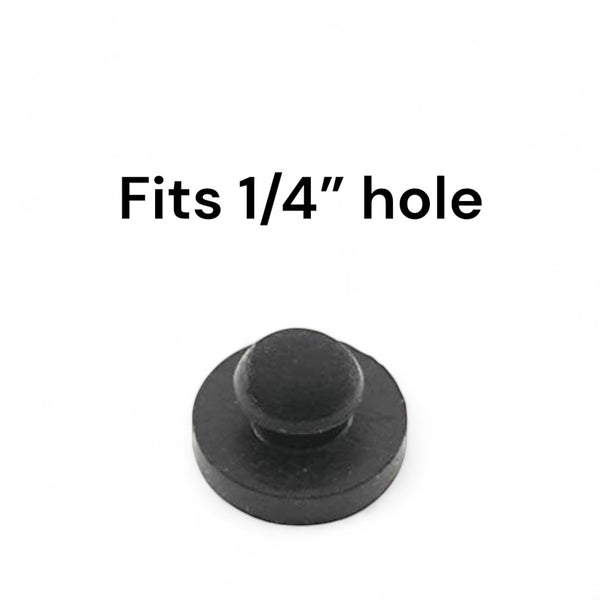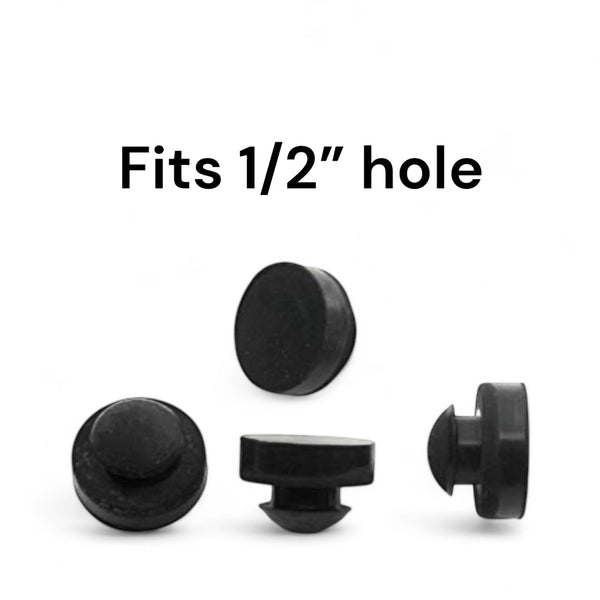


A rubber grommet that is off by even a small amount can turn an easy install into a headache. Too loose, and it slips out or fails to protect the wire. Too tight, and you end up forcing it into the panel, damaging the part, or wondering if you ordered the wrong size. If you are trying to figure out how to measure rubber grommet size, the good news is that you usually only need a few basic dimensions to get it right.
The key is knowing which dimension matters most for your application. Some people start by measuring the outside of the grommet they already have, but that is not always the best place to begin. In most cases, the hole size, panel thickness or groove width, and inner diameter will tell you much more about fitment than the overall outside diameter alone.
How to measure rubber grommet size the right way
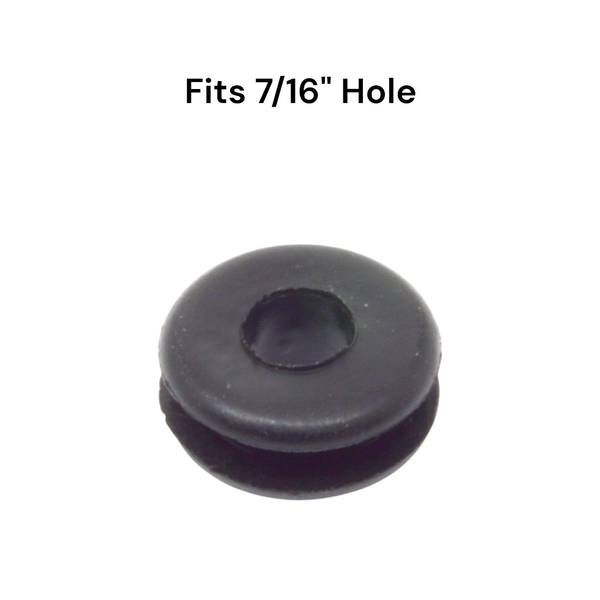
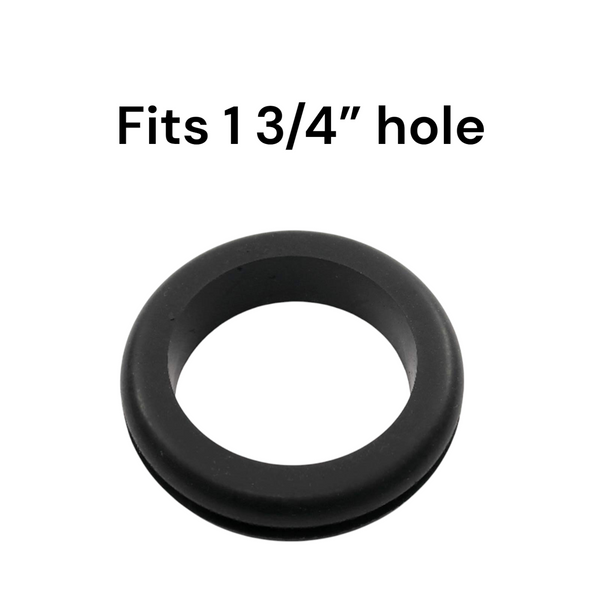
The most reliable starting point is the panel hole. Standard rubber grommets are designed to snap into a specific hole diameter, so that measurement usually drives the selection process. If the grommet is going into sheet metal, plastic, or another panel, measure the diameter of the hole it needs to fit.
If you already have an old grommet, remove it before measuring whenever possible. Measuring the hole with the grommet still installed can give you a false reading, especially if the rubber is compressed, worn, or swollen from age and exposure.
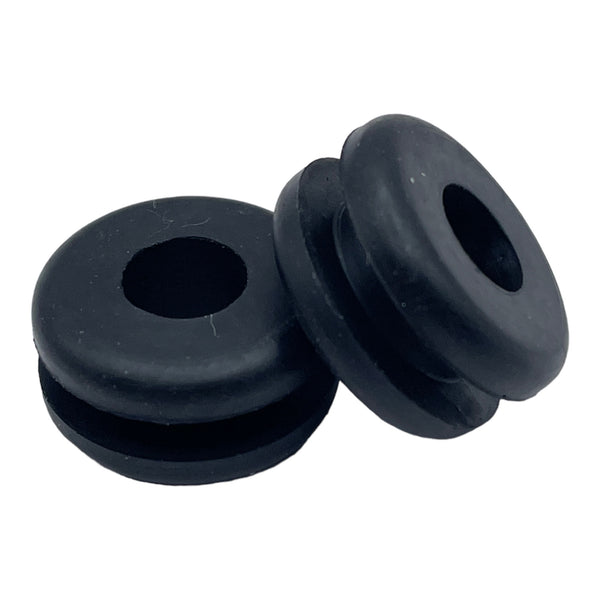
After hole size, the next dimension is panel thickness. A grommet has a groove that grips the panel edge, and that groove is made for a certain material thickness range. If your panel is much thicker or thinner than the groove is designed for, the grommet may not seat properly. It might pop out, sit crooked, or fail to hold securely.
Then check the inner diameter, which is the opening in the center of the grommet. This matters if you are passing a wire, cable, hose, or tube through it. The opening needs to be large enough to allow the item through without excessive pressure, but not so oversized that it leaves too much movement or exposed edge.
The 3 measurements that matter most
For most standard rubber grommets, these are the dimensions you want to collect before buying.
1. Hole size
This is the diameter of the panel cutout the grommet snaps into. For many buyers, this is the single most important measurement. If the hole size is wrong, nothing else really saves the fit.
Use calipers if you have them. A digital caliper gives the cleanest reading, especially on smaller parts. If you do not have calipers, a ruler can work for larger grommets, but it is easier to be off by a sixteenth of an inch, and that can matter.
2. Panel thickness (also called groove width)
Measure the thickness of the material where the grommet will be installed. Sheet metal, plastic panels, enclosures, and firewall openings can vary more than people expect. The groove on the grommet needs to match that thickness closely enough to grip the edge.
Some rubber grommets have a little flexibility here, so there is often a usable range rather than one exact thickness. Still, close is better than guessing.
3. Inner diameter
This is the size of the opening in the middle. If the grommet is being used strictly as an edge protector around an open hole, this may be less critical. But if you are routing something through it, the inner diameter needs attention.
For wires and cables, allow enough clearance for installation without leaving too much free play. For bundles, it depends on whether you want a snug pass-through or just basic abrasion protection.
What tools to use
A digital caliper is the best tool for measuring rubber grommet size. It gives you accurate readings for hole diameter, panel thickness or groove width, and inner diameter. If you work with electrical, automotive, or mechanical parts regularly, it is worth having one nearby.
A basic ruler or tape measure is better than nothing, but it is more useful for larger grommets than small precision sizes. If you are measuring a worn part, soft rubber can also distort under pressure, so use a light touch.
If the old grommet is damaged, brittle, or stretched, treat its measurements as a reference rather than a final answer. In that situation, the panel hole and the material passing through it are usually more trustworthy than the old rubber itself.
Measuring an existing grommet vs. measuring the application
If you have the old part in hand, measuring it can help, but it is not always enough. Rubber changes over time. Heat, oil, UV exposure, compression, and age can all affect shape and size. A grommet pulled from an older panel may no longer reflect its original dimensions.
That is why measuring the actual application is often more accurate. Start with the hole in the panel, then confirm panel thickness, then check what needs to pass through the center. If the old grommet still looks healthy, you can use its groove width and inner diameter as a cross-check.
This matters a lot in automotive and repair work, where the original part may have flattened or hardened after years of service. Matching a distorted part exactly can lead to ordering the wrong replacement.
Common mistakes when measuring rubber grommets
The most common mistake is measuring only the outside diameter. That dimension can be useful, but on its own it rarely tells the full story. Two grommets can have similar outer diameters and fit completely different hole sizes or panel thicknesses.
Another common issue is ignoring panel thickness. Buyers often focus on the hole and center opening, then wonder why the grommet will not seat cleanly. The groove has to match the panel well enough to lock in place.
There is also the problem of mixing up fractional and decimal measurements. If your caliper reads 0.500 inches and the listing uses fractions, that is 1/2 inch. A small conversion mistake can put you into the wrong size range fast.
Finally, do not assume rubber will just stretch enough to make up the difference. Sometimes it will. Sometimes it will tear, deform, or install badly. A little flexibility is normal, but a forced fit is not the same as a correct fit.
It depends on the type of grommet
Not every rubber grommet is meant for the same job. A basic open grommet for wire protection is measured differently in practice than a closed grommet, a locking panel plug, or an expandable style. The general idea stays the same, but the priority changes.
For a standard wire-pass grommet, hole size and inner diameter are usually the first two numbers to verify. For a panel plug, hole size and panel thickness may matter more than the center opening because there is no pass-through. For locking or expandable designs, the fit may depend even more on the panel range and retention style than on the simple outside measurements.
That is why measurement-driven product naming is so useful. When parts are organized by hole size, groove width, inner diameter, and panel thickness, it becomes much easier to narrow down the right fit without guessing from photos.
A simple way to get the size right
If you want the shortest path to a good match, measure the hole diameter first. Next, measure the panel thickness. Then measure the diameter of the wire, cable, or opening you need in the center. If you are replacing an old part, compare groove width too.
Those four numbers will solve most sizing questions. You do not need an engineering drawing. You just need clean measurements and a product listing that makes those dimensions easy to compare.
That is also the reason many buyers prefer shopping with a supplier that organizes parts around actual fitment specs instead of vague category names. On a site like dangoodbuy, where dimensions drive the shopping flow, you can skip a lot of the trial and error that usually comes with sourcing small hardware parts.
If you are between sizes, stop and think about the application before ordering. A snug wire-protection fit may be better in one job, while a little extra clearance may make more sense in another. The right grommet is not just close in size - it matches how the part will actually be used.